
Brushing
- Two minutes, twice a day, last thing at night and on one other occasion.
- A fluoride toothpaste of at least 1,350 to 1,500 ppm fluoride for adults. A daily paste such as Oral-B Pro-Expert is well suited to most patients.
- Spit, do not rinse. Rinsing washes away the fluoride you have just applied, and this is the single easiest improvement most people can make.
- Soft bristles and light pressure. Scrubbing hard causes recession and abrasion; it does not clean better.
- Angle the bristles towards the gumline at about 45 degrees and use small movements.
Electric brushes
- An oscillating-rotating or sonic brush removes more plaque than a manual brush for most people.
- The Oral-B iO range is a reliable choice. Use the sensitive setting and let the pressure sensor guide you rather than pushing.
- Guide the head slowly from tooth to tooth and let it do the work. Do not scrub with it.
- Replace the head every three months, or sooner once the bristles splay.
Between the teeth
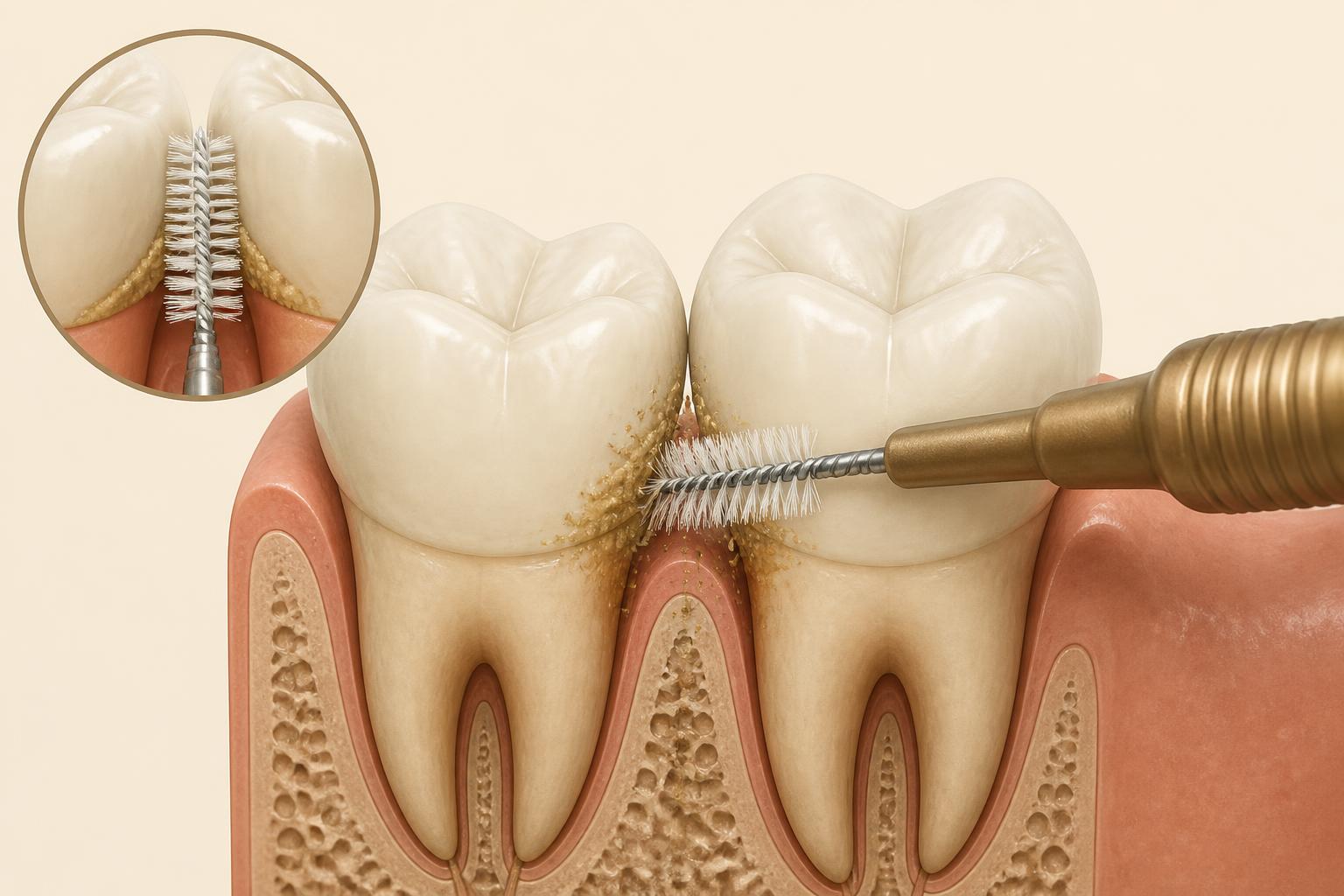
- Clean interdentally every day. This is where most gum disease and most adult decay begins.
- Interdental brushes such as TePe are more effective than floss wherever a brush fits. Use the largest size that passes without forcing, and you may need more than one size across the mouth.
- Floss only where the space is too tight for a brush.
- Water flossers are a useful addition around bridges, implants and fixed retainers, but they do not replace physical cleaning.
Diet
How often you consume sugar and acid matters more than how much. Six separate sweet coffees do far more damage than the same sugar taken at once. Keep sugary and acidic items to mealtimes and drink water in between.
Reviews
Recall intervals should be set by individual risk rather than a fixed six months for everyone. Depending on gum health, decay risk and the restorations you have, that may be three months or it may be two years.
General guidance from Dr Vikas Prinja, GDC No. 265374. It does not replace the specific instructions given for your own treatment.