
Facial aesthetics
Polynucleotide treatment
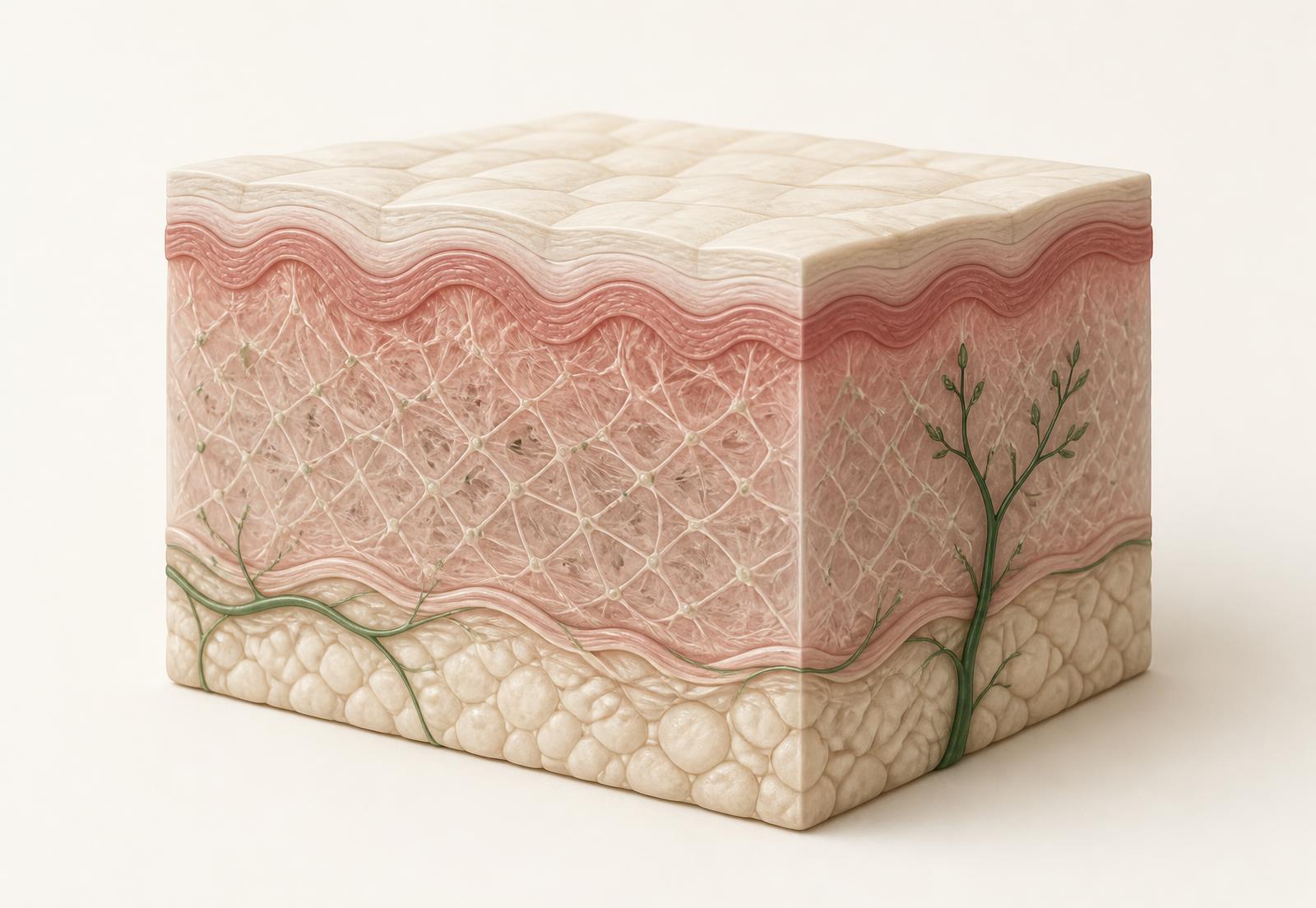
Polynucleotides are injectable products containing purified polynucleotide chains, used in aesthetic practice with the intention of improving the appearance of skin quality in specific areas over a course of treatments.
At a glance
- Layer addressed
- Within the skin
- Course
- Typically a short course of sessions spaced a few weeks apart, then periodic maintenance.
- First appointment
- Assessment and written plan
The short answer: Polynucleotides
Polynucleotides are injectable products containing purified polynucleotide chains, used in aesthetic practice with the intention of improving the appearance of skin quality in specific areas over a course of treatments.
What is assessed
- Skin quality, thinness and crepiness in the intended area
- Whether the concern is skin quality or volume — they respond differently
- Medical history, allergies and any fish-derived product sensitivity
- Realistic expectations about the size of change
How it works
- 01
Assessment
The specific area and the specific concern are recorded, with photography where consented.
- 02
Course planning
A course is planned in advance, because single sessions are not how these products are used.
- 03
Treatment
Small volumes are placed intradermally across the planned area.
- 04
Review
Progress is reviewed against the baseline record rather than against memory.
Who it suits
- Adults concerned about skin quality rather than facial volume
- Patients willing to complete a course and accept a modest, gradual change
What it cannot do
- Not a volumising treatment and not a substitute for one
- Changes are gradual and modest, and are not visible after a single session
- The published evidence base for aesthetic use is still developing, and the size and durability of benefit is not firmly established
- Results are temporary and maintenance is required
Risks and side effects
- Injection-site swelling, bruising, redness and small lumps
- Infection
- Allergic reaction, including to fish-derived components in some products
- The possibility of no perceptible improvement
Risks are discussed individually before consent. No treatment is provided on the day a plan is first discussed.
Alternatives
- Topical skincare and sun protection
- Skin boosters
- Microneedling
- No treatment
Course and aftercare
Typically a short course of sessions spaced a few weeks apart, then periodic maintenance.
- Avoid make-up on the area for the period advised
- Avoid saunas, sunbeds and strenuous exercise for 24 hours
- Use sun protection daily
Clinician’s note
“I will not tell you this rebuilds or regenerates your skin, because the evidence does not support that wording. What I can say is that it is used to try to improve the appearance of skin quality, gradually, over a course — and that if that is not what you want, we should be discussing something else.”
Dr Vikas Prinja, Dental Surgeon · GDC 265374
Some treatments for lines and wrinkles involve prescription-only medicines. UK advertising rules do not permit these to be promoted to the public, so they are not named, priced or advertised on this website. They can only be considered after a face-to-face assessment by a prescriber, who will decide whether treatment is appropriate for you.
Consider alongside
Related facial aesthetic treatment
- Volume, contour and supportFacial aesthetics consultationA facial aesthetics consultation is an assessment of facial anatomy, proportion, muscle activity and skin quality, after which suitable options — including doing nothing — are explained in writing before any treatment is agreed.
- Muscle activityLines & wrinkles consultationA lines and wrinkles consultation assesses whether a line is caused by muscle activity, volume loss, skin quality or sun damage, because each of those has a different management route and some respond to none of them.
- Volume, contour and supportDermal fillersDermal fillers are injectable hyaluronic-acid gels used to restore or support facial volume and contour in specific areas; the effect is temporary and the material is gradually broken down by the body.
- Within the skinSkin boostersSkin boosters are injectable hyaluronic-acid preparations placed into the skin with the intention of improving skin hydration and appearance, rather than adding facial volume or contour.
Consultation
Thinking about improving your smile?
Start with a comprehensive assessment and understand your options before deciding on treatment.