
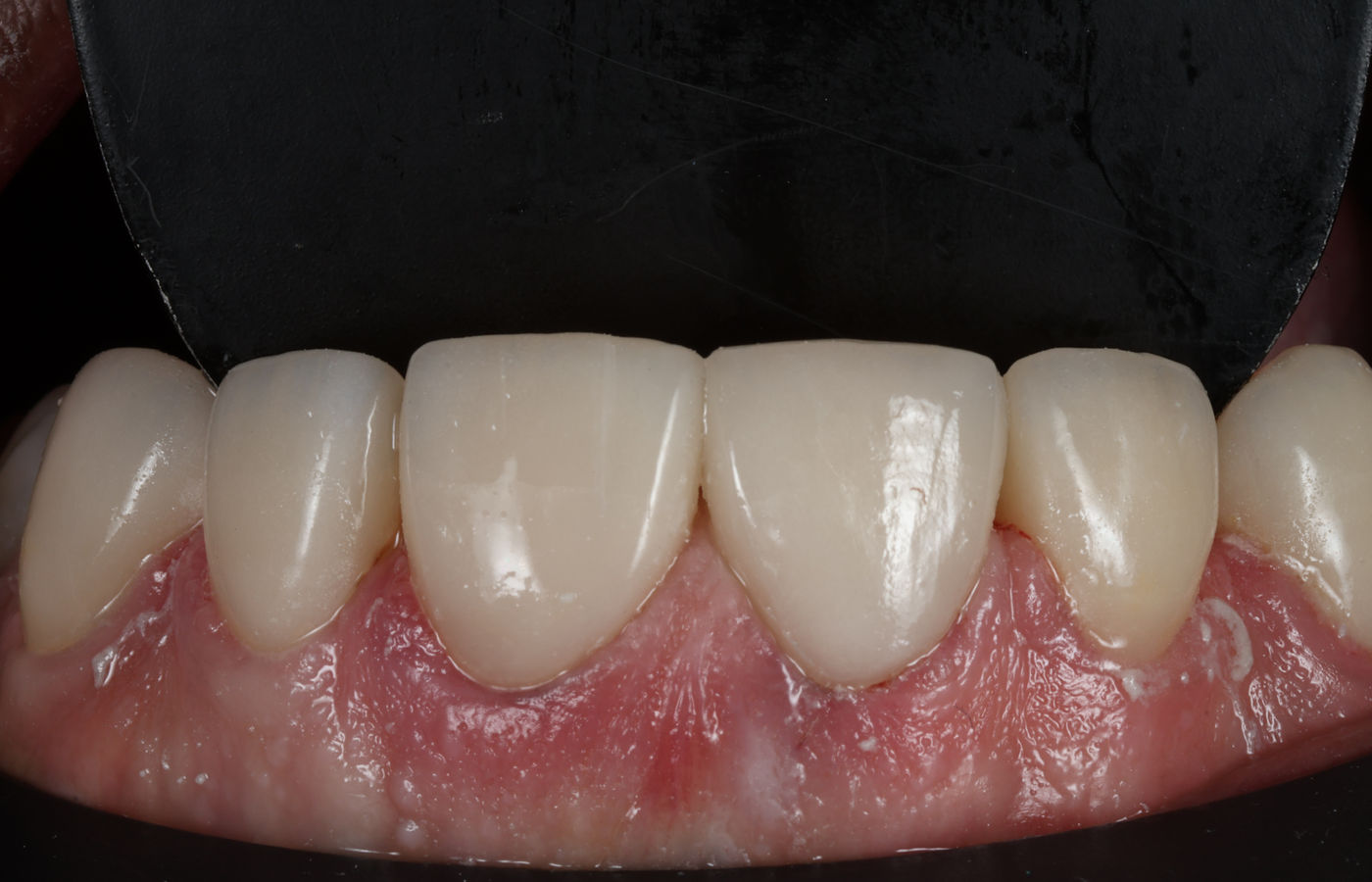
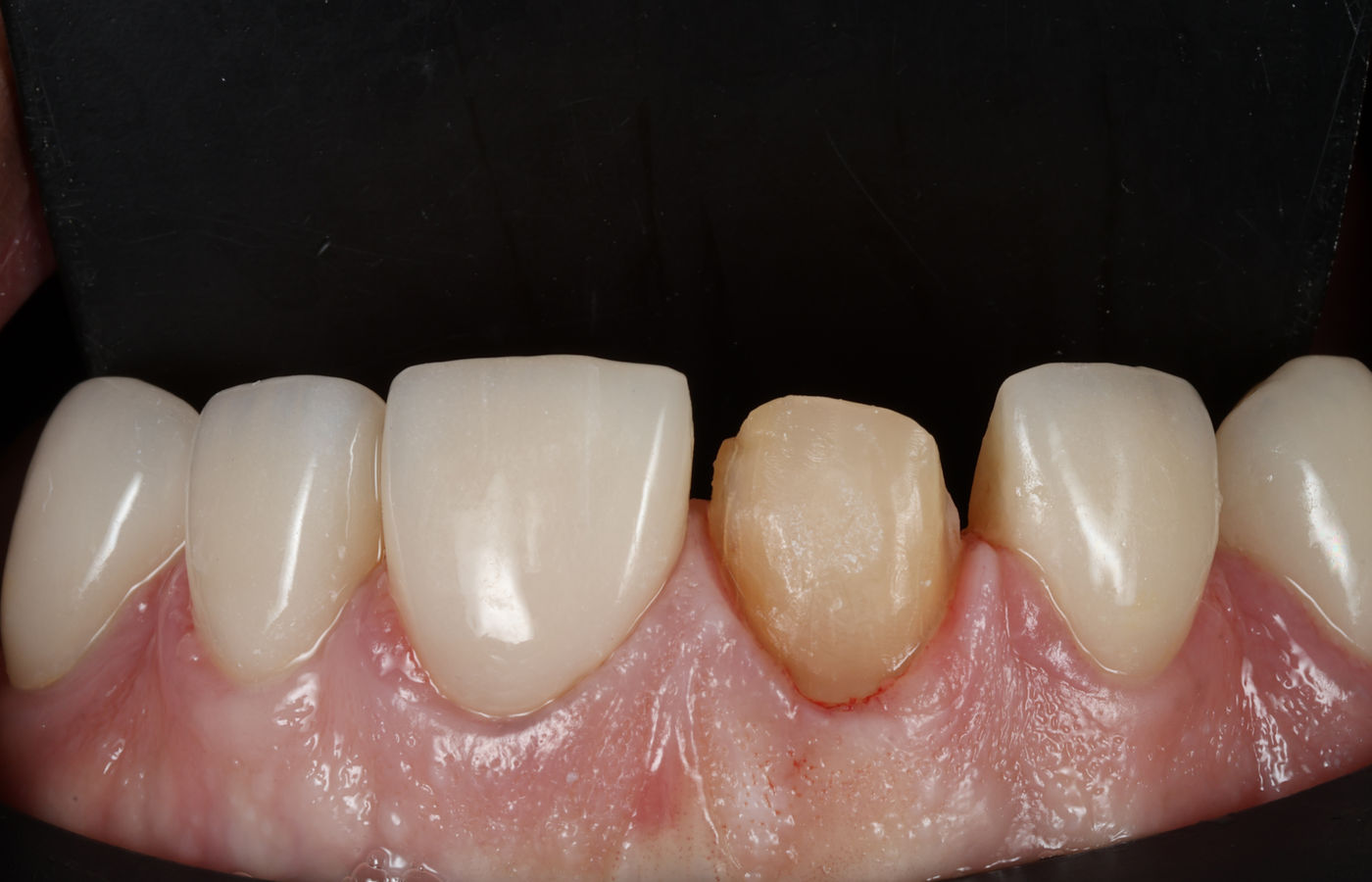
 BeforeAfter
E.max crown on a central incisor
A heavily restored front tooth that no longer matched its neighbour and needed full protection.
- Appointments
- Preparation, temporary, fit
- Duration
- Two clinical visits with laboratory time between
Restore
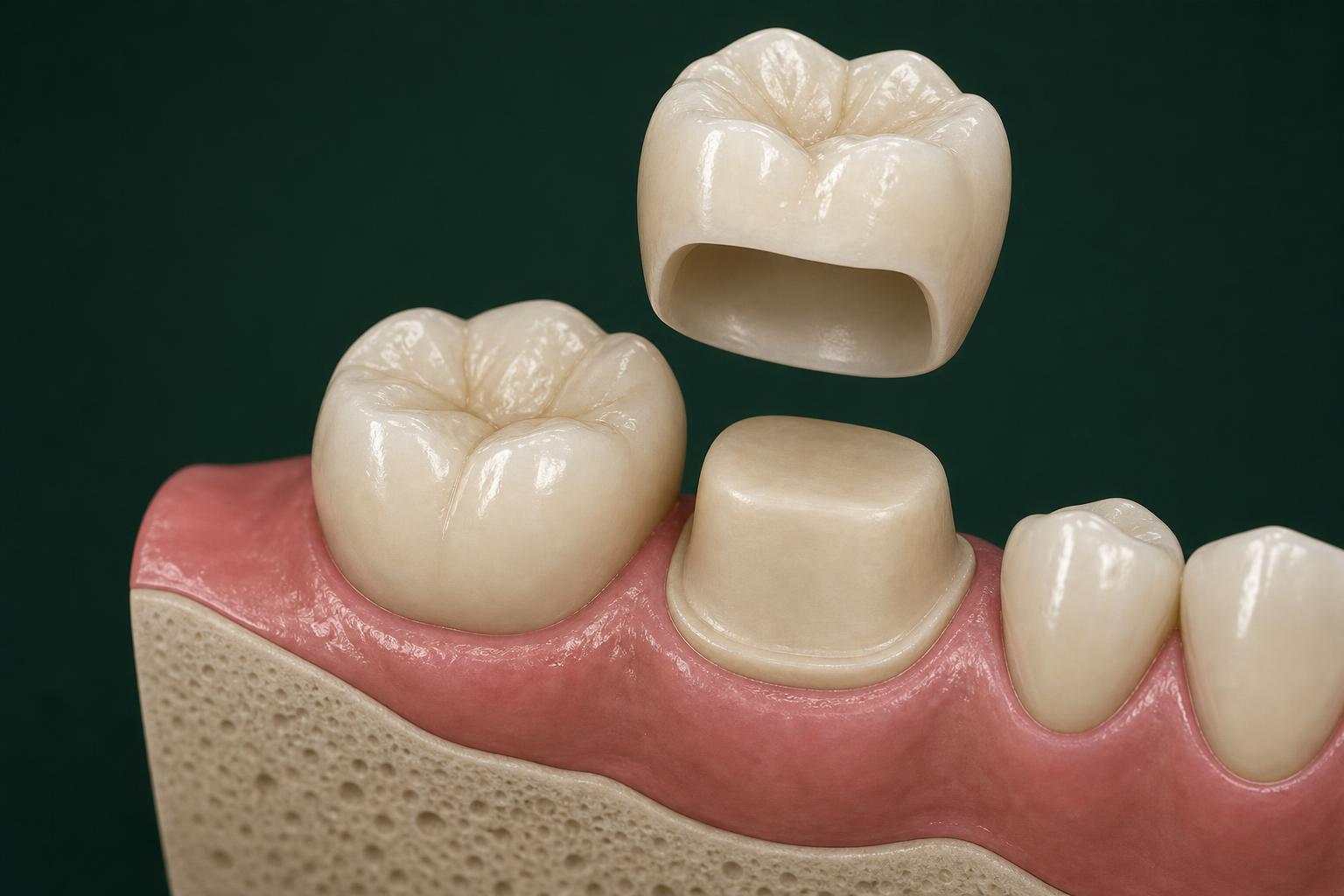
A crown is a laboratory-made restoration that covers a damaged tooth to restore its shape and strength; a bridge uses one or more crowns to replace an adjacent missing tooth.
At a glance
Crowns start from £525 per unit, including laboratory work. A bridge is costed by the number of units it spans. Root canal treatment, where a tooth needs it first, starts from £495.
Book a consultationAssessment and diagnosis before any cosmetic treatment
The short answer: Crowns & bridges
A crown is a laboratory-made restoration that covers a damaged tooth to restore its shape and strength; a bridge uses one or more crowns to replace an adjacent missing tooth.
Crowns & bridges is planned and provided by Dr Vikas Prinja at Apple Dental Studios, 106 Marsh Road, Pinner, with patients travelling from across North West London. If you are looking for a dentist in Pinner, that page sets out how consultations, written plans and fees work here.
Compare your options
You are reading
Crowns & bridges
The option described on this page.
Partial coverage
Restorative dentistry
A direct restoration or onlay preserves more tooth than a full crown and is preferred where enough sound structure remains.
Front teeth only
Ceramic veneers
On front teeth with intact structure, a veneer covers the visible surface rather than the whole tooth.
If not restorable
Dental implants
Where a tooth cannot be restored predictably, replacement with an implant may be the more durable long-term option.
The tooth is shaped to accommodate the restoration.
Digital scans or impressions are sent to the laboratory.
A provisional restoration protects the tooth.
The definitive crown or bridge is fitted and adjusted.
Crowns commonly last ten years or more; longevity depends on the underlying tooth, bite and hygiene.
From £525Guide fee
Crowns start from £525 per unit, including laboratory work. A bridge is costed by the number of units it spans. Root canal treatment, where a tooth needs it first, starts from £495.
A written plan with itemised fees is provided after assessment, before any treatment is agreed. See the full fee guide.
Compare options
Explore the dental glossary for plain-language definitions of the clinical terms used here.
Clinical transparency
General Dental Council
National Institute for Health and Care Excellence
Clinical cases
Published only with explicit patient consent.
BeforeAfterA heavily restored front tooth that no longer matched its neighbour and needed full protection.
Read next
Written by Dr Vikas Prinja for patients considering or already having this treatment.
Common questions
Crowns start from £525 per unit at this practice. The final fee depends on the tooth, the material, any treatment required beforehand and the laboratory work.
A filling or onlay is preferred while enough sound tooth remains to support it. A crown is considered when the remaining tooth is heavily broken down, root treated or at risk of fracture, because full coverage protects what is left.
Preparation is done under local anaesthetic, so it is not usually painful. Mild sensitivity or tenderness between the temporary and definitive crown is common and normally settles after fitting.
Crowns commonly last many years when the underlying tooth is healthy, the bite is managed and hygiene is good. Failure is usually related to decay at the margin, root fracture or heavy grinding rather than the crown material itself.
Brush as normal and clean daily around and, for bridges, underneath the restoration with interdental brushes or superfloss. Keep routine hygiene visits, avoid biting hard objects, and wear a night guard if you grind. The tooth beneath a crown can still decay, so the margin is checked at each review.
Where enough sound tooth remains, an onlay, an indirect ceramic restoration or a well-designed direct composite can restore the tooth while removing less tissue. A crown is chosen when the remaining tooth needs full coverage for strength, often after root treatment or a large fracture.
Bonding is usually additive, repairable and reversible, but stains more readily. Veneers are more stain resistant and durable, but require enamel preparation and are irreversible. The right choice depends on tooth position, remaining enamel, bite and how much change is needed.
Clinical authorship
The London Dentist. Cosmetic, restorative and implant dentistry in London.
Clinically reviewed Updated
About Dr Vikas PrinjaHow this fits together
How this treatment relates to the others, and why each relationship exists.
Less invasive alternative
Restorative dentistry
A direct restoration or onlay preserves more tooth than a full crown and is preferred where enough sound structure remains.
Less invasive alternative
Ceramic veneers
On front teeth with intact structure, a veneer covers the visible surface rather than the whole tooth.
Alternative tooth replacement
Dental implants
Where a tooth cannot be restored predictably, replacement with an implant may be the more durable long-term option.
Restore
Restorative dentistry repairs and rebuilds damaged, worn or missing teeth — using fillings, onlays, crowns, bridges or implants — with the aim of restoring function while preserving as much natural tooth as possible.
Restore
A ceramic veneer is a thin, custom-made porcelain facing bonded to the front of a tooth to change its shape, colour or alignment, usually requiring a small amount of enamel to be prepared.
Replace
A dental implant is a titanium or ceramic fixture placed into the jawbone to support a crown, bridge or denture, replacing the root of a missing tooth.
Consultation
Start with a comprehensive assessment and understand your options before deciding on treatment.