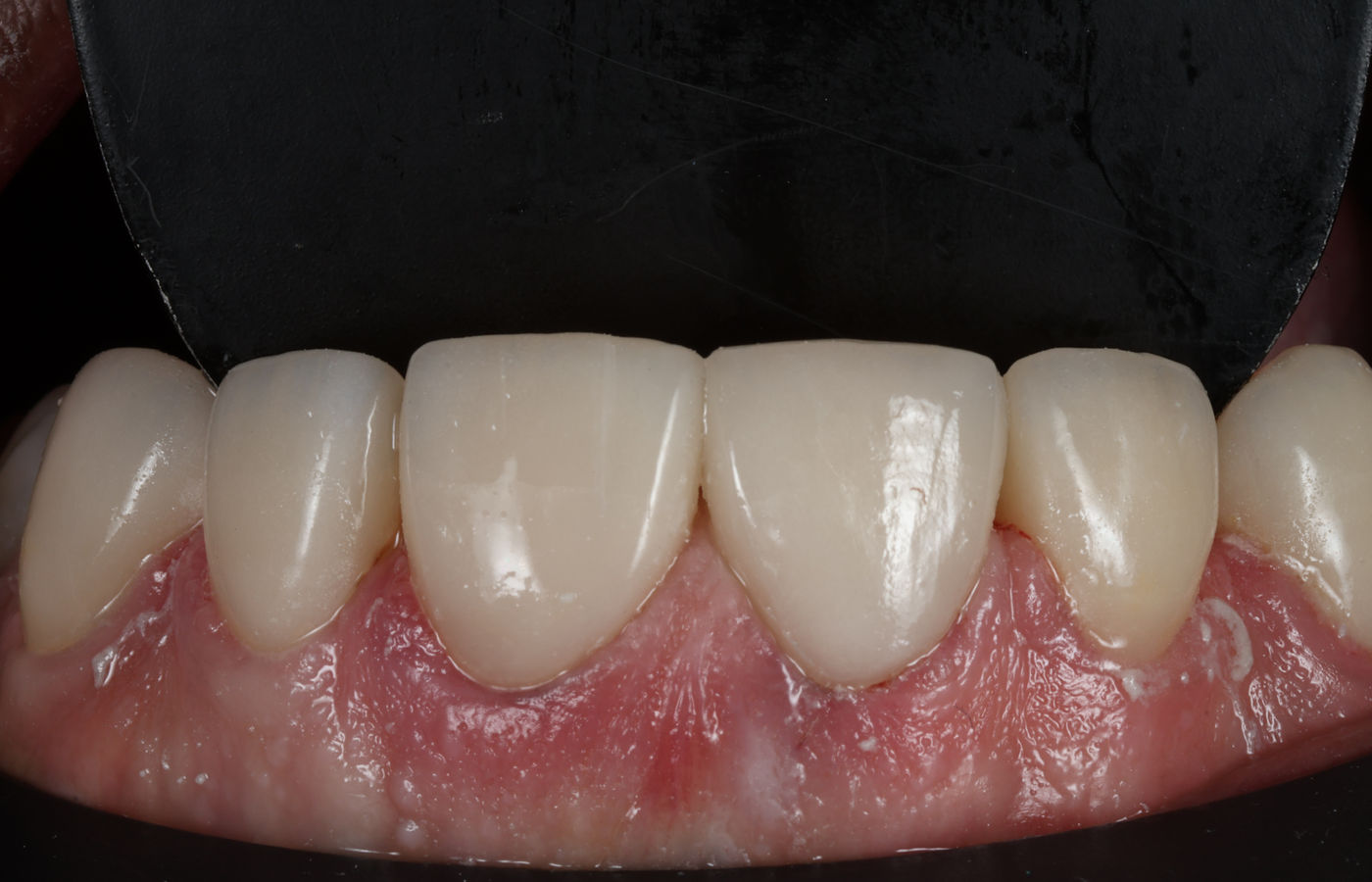
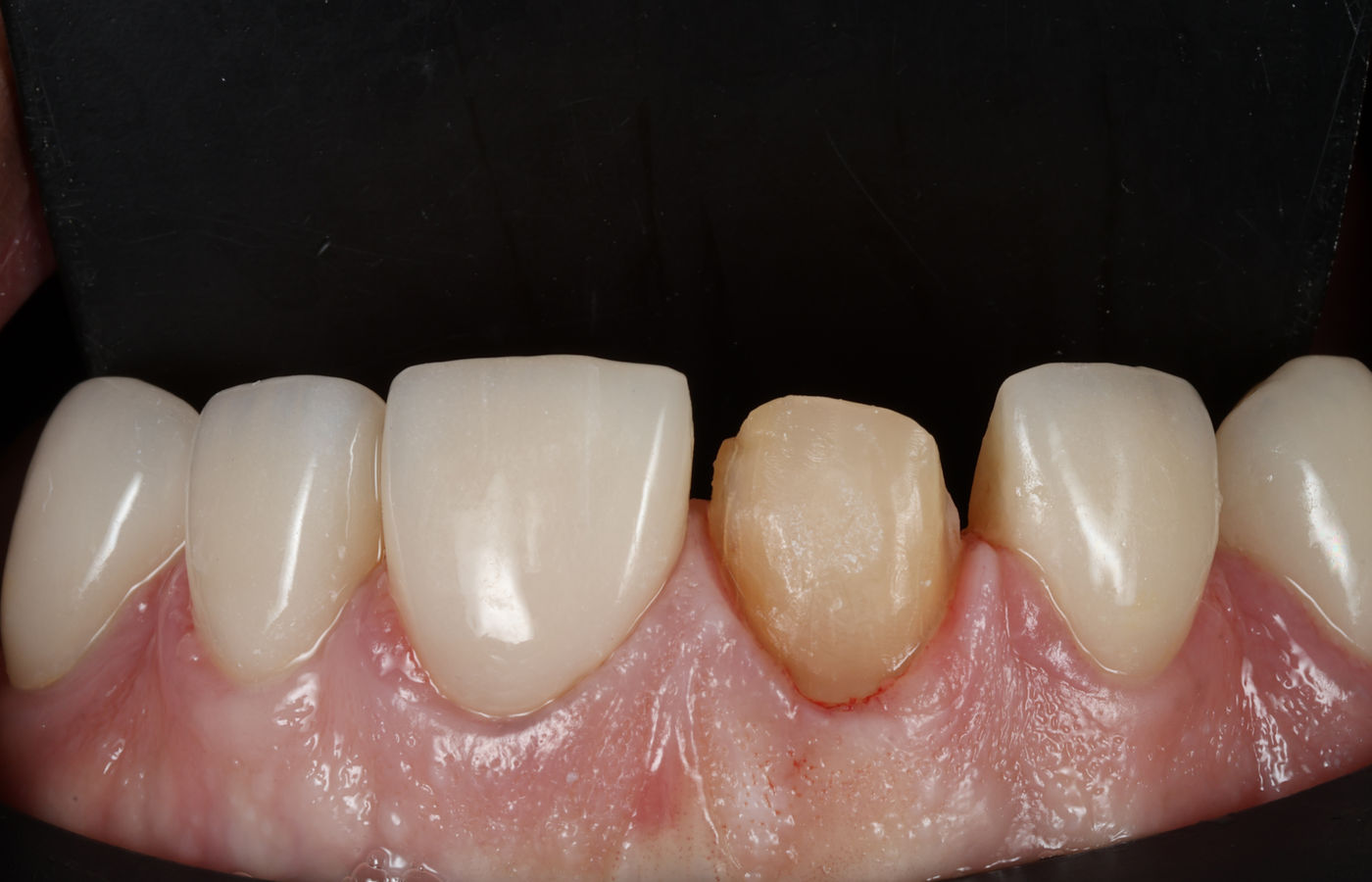
An e.max crown is a full-coverage restoration made from lithium disilicate glass-ceramic, chosen where a tooth needs complete protection but the restoration must still transmit light like natural enamel.
At a glance
Longevity
Bonded lithium disilicate restorations are commonly reported to perform well beyond ten years where the bite is managed and hygiene is maintained.
Fees
E.max crowns start from £800 per tooth, including laboratory work. Root canal treatment, where the tooth needs it beforehand, starts from £495.
E.max crowns start from £800 per tooth, including laboratory work. Root canal treatment, where the tooth needs it beforehand, starts from £495.
Assessment and diagnosis before any cosmetic treatment
The short answer: E.max crowns
An e.max crown is a full-coverage restoration made from lithium disilicate glass-ceramic, chosen where a tooth needs complete protection but the restoration must still transmit light like natural enamel.
E.max crowns is planned and provided by Dr Vikas Prinja at Apple Dental Studios, 106 Marsh Road, Pinner, with patients travelling from across North West London. If you are looking for a dentist in Pinner, that page sets out how consultations, written plans and fees work here.
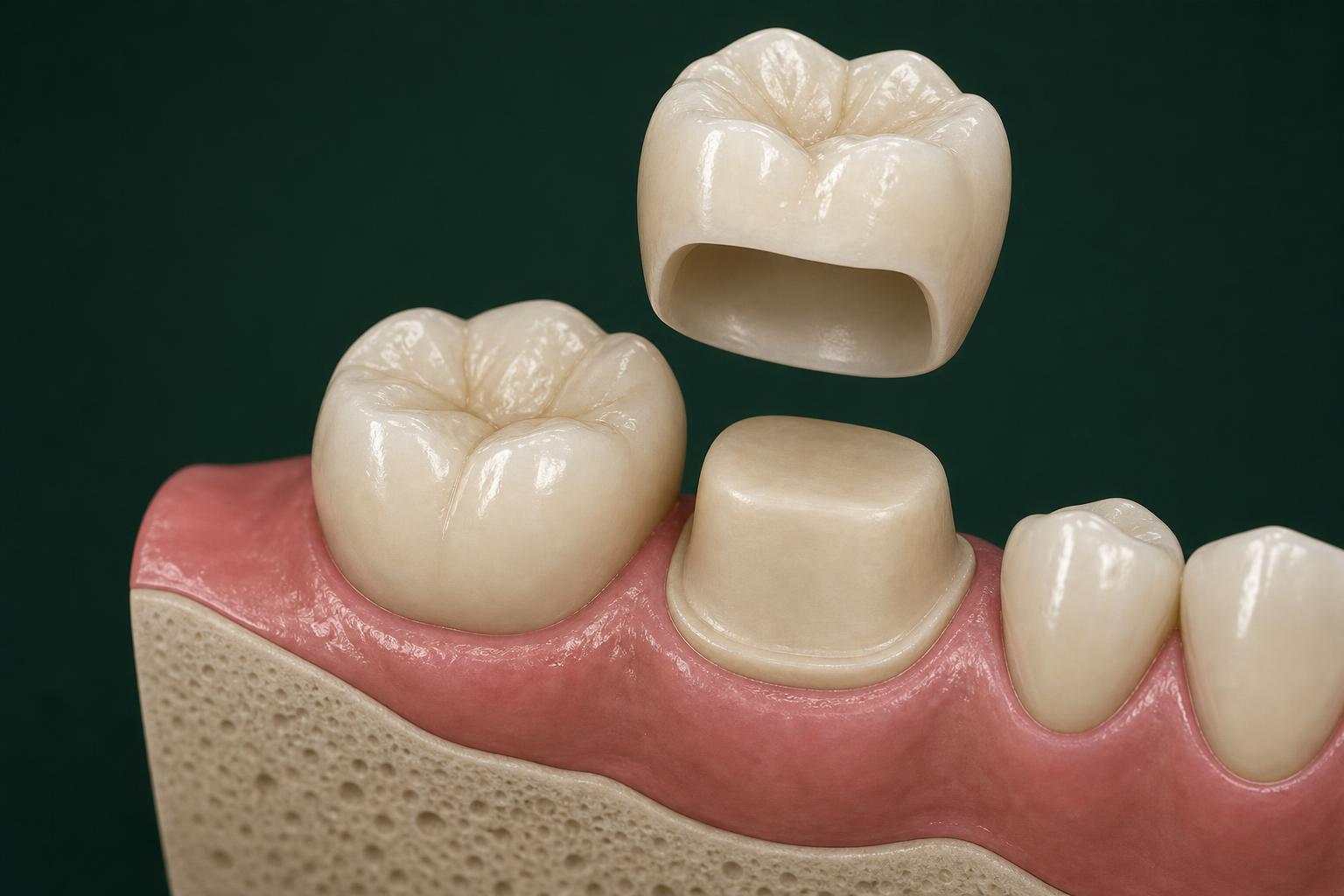
IllustrationEducational illustration — a full ceramic crown covers the prepared tooth when partial coverage cannot provide protection.
Who is suitable for e.max crowns?
Teeth that are heavily restored, root-treated or fractured and need full coverage
Visible teeth where a metal-based crown would look opaque
Patients whose bite has been assessed and, where necessary, managed first
What problems does e.max crowns solve?
Extensive tooth loss or fracture
Failing large fillings that can no longer be repaired
Discoloured or opaque older crowns
Teeth needing protection after root canal treatment
What happens at the e.max crowns assessment?
Assessment of remaining tooth structure and whether an onlay would suffice
Bite and wear analysis, including grinding habits
Radiographs and vitality testing where indicated
Shade and translucency selection with the laboratory
How does e.max crowns work?
01
Planning
Coverage is decided — filling, onlay or full crown — based on how much sound tooth remains.
02
Preparation
Only the tooth surface required for the material thickness is prepared.
03
Records
A digital scan and shade record are sent to the laboratory.
04
Temporary
A provisional restoration protects the tooth and tests shape and bite.
05
Fit
The crown is bonded, the bite checked and margins finished.
What are the benefits?
High strength with genuine translucency — no metal substructure
Bonded rather than only cemented, which supports the remaining tooth
Predictable shade matching for front teeth
What are the limitations?
Requires removal of tooth tissue and is not reversible
Not always the first choice for heavy posterior grinding, where zirconia may be advised
Existing crowns and fillings will not lighten with whitening, so shade is planned first
What are the risks of e.max crowns?
Sensitivity after preparation
Nerve inflammation in a heavily restored tooth, occasionally requiring root treatment
Are veneers always necessary for a smile makeover?
+
No. Many smile makeovers are achieved with alignment, whitening and bonding, which preserve more natural tooth. Ceramic veneers are indicated when shape, strength or colour cannot be changed predictably by less invasive means.
How do I choose between bonding and veneers?
+
Bonding is usually additive, repairable and reversible, but stains more readily. Veneers are more stain resistant and durable, but require enamel preparation and are irreversible. The right choice depends on tooth position, remaining enamel, bite and how much change is needed.
How much does an E.max crown cost?
+
An E.max ceramic crown starts from £800 at this practice. Suitability depends on the remaining tooth structure, bite, colour and the restoration design.
What is the difference between an E.max crown and a veneer?
+
A veneer covers the visible front surface of a tooth, while an E.max crown covers the whole tooth. A crown is chosen where the tooth is broken down, root treated or under heavy bite load; a veneer is chosen where enough sound tooth remains.
Are E.max crowns suitable for back teeth?
+
E.max lithium disilicate is used on front and back teeth where there is adequate tooth structure and the bite is favourable. Where bite forces are very heavy or grinding is unmanaged, a stronger material or a protective night guard may be advised.
How long do dental crowns last?
+
Crowns commonly last many years when the underlying tooth is healthy, the bite is managed and hygiene is good. Failure is usually related to decay at the margin, root fracture or heavy grinding rather than the crown material itself.
Clinical authorship
Written and reviewed by Dr Vikas Prinja
The London Dentist. Cosmetic, restorative and implant dentistry in London.
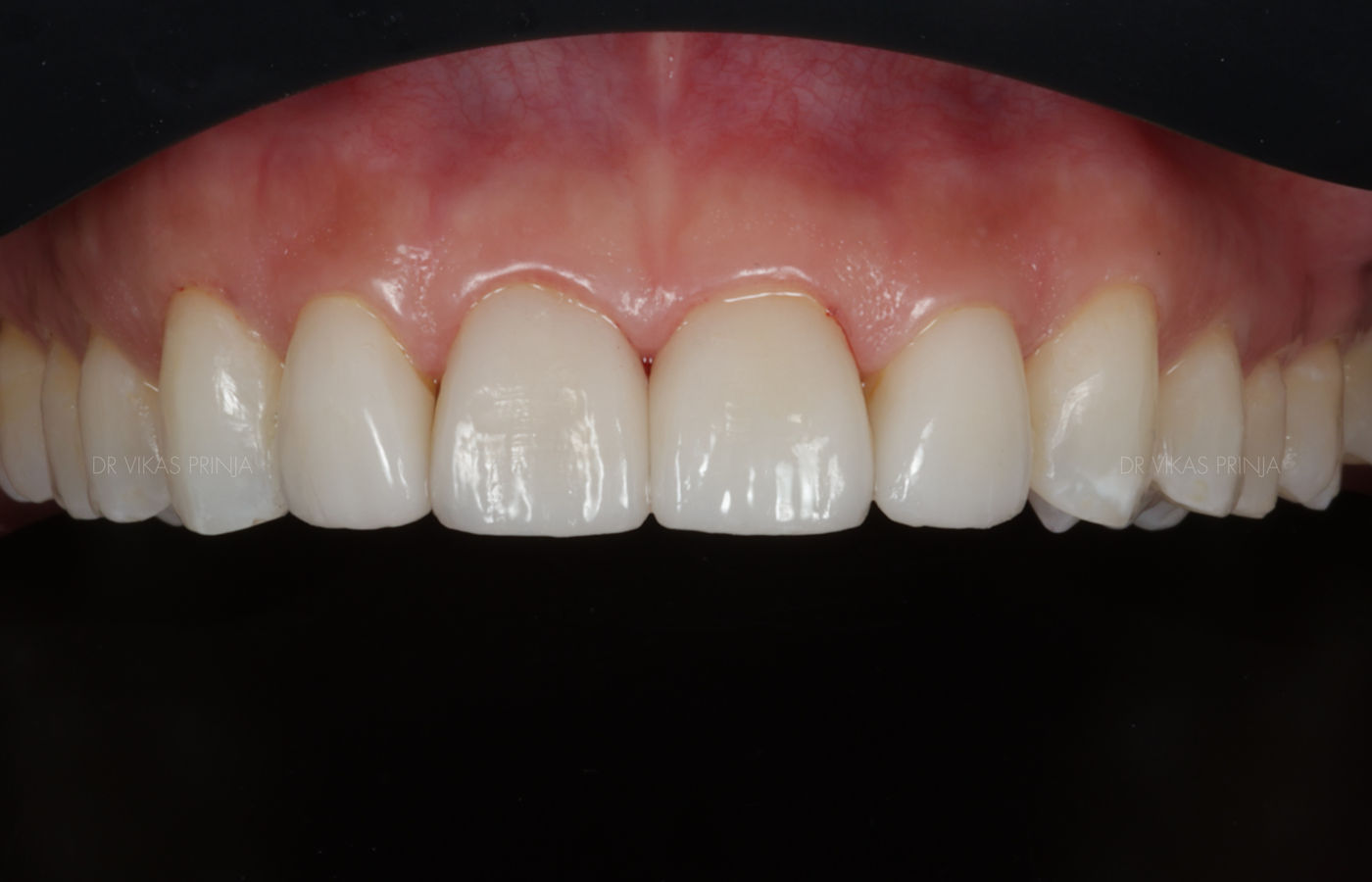
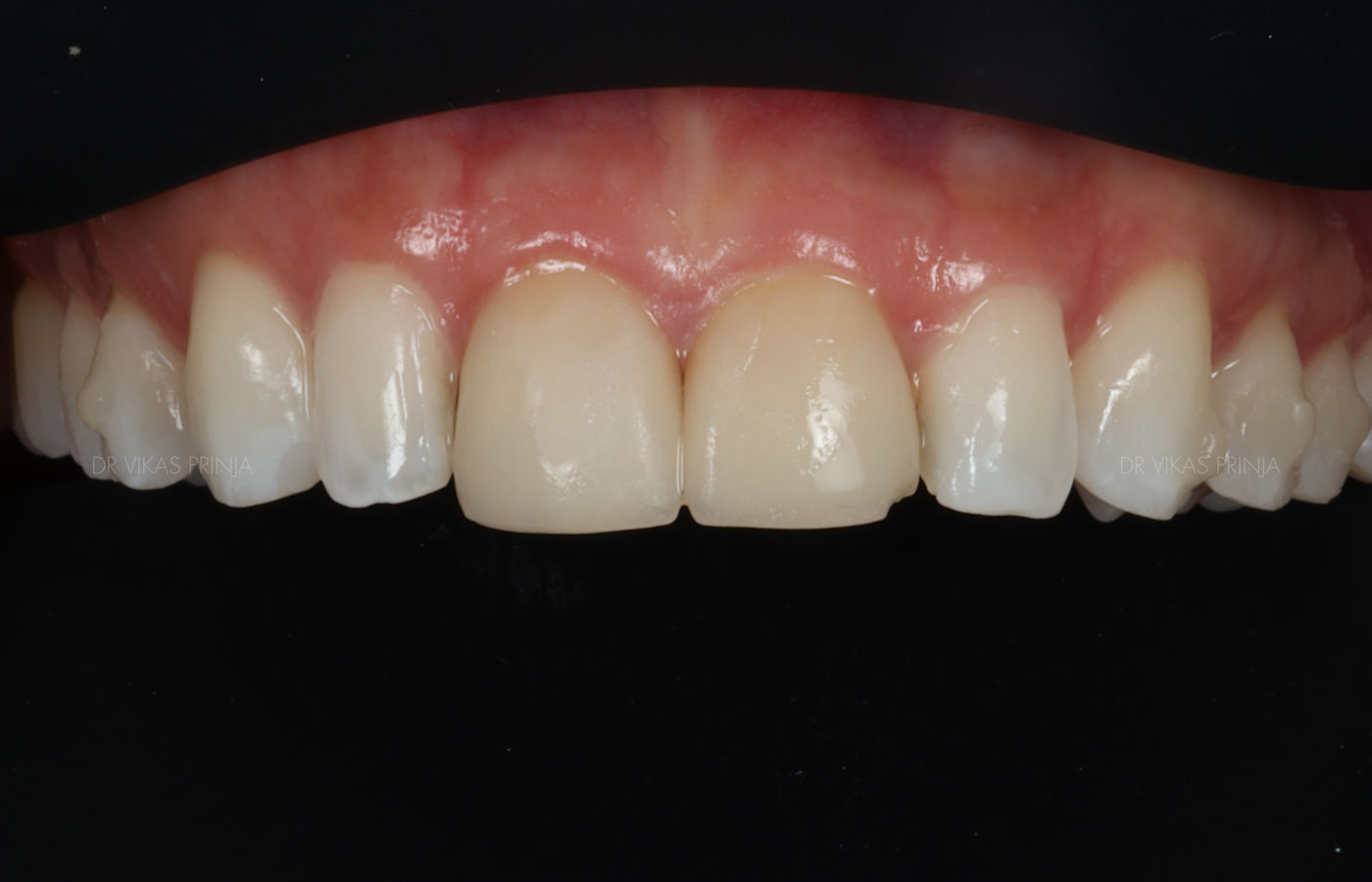 BeforeAfter