
Restore
Hyper-realistic composite restoration in London
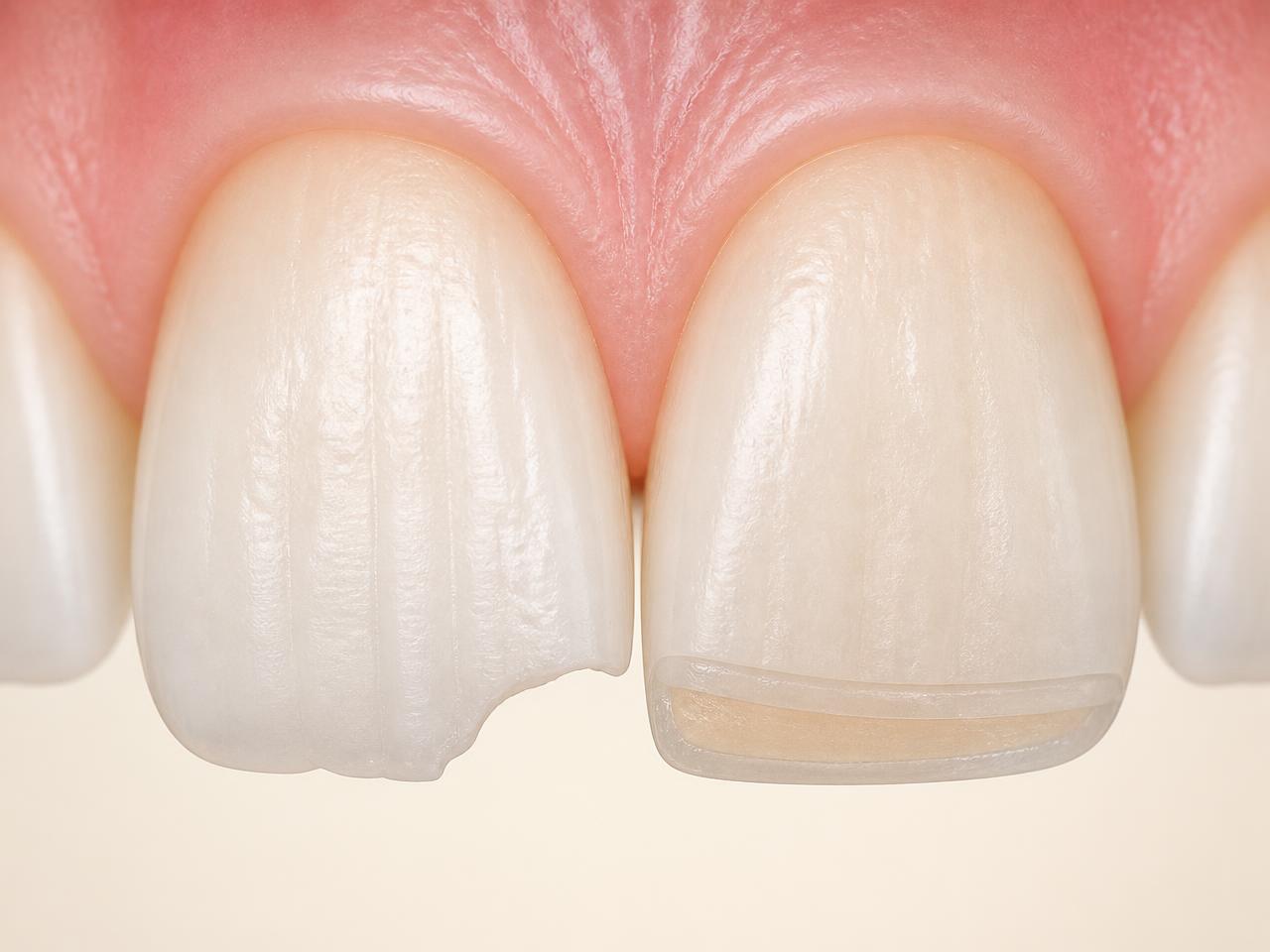
Hyper-realistic composite restoration is layered, hand-sculpted resin work that rebuilds a tooth using several shades and translucencies so the restoration reproduces the light behaviour, surface texture and internal detail of natural enamel and dentine.
At a glance
- Longevity
- Comparable to other direct composite work — commonly quoted at around five to seven years before repair or refinishing, with polishing extending appearance considerably.
- Fees
- Direct composite restoration starts from £75. Layered, hand-sculpted single-tooth work is quoted on the clinical time it requires and confirmed in writing after assessment.
Direct composite restoration starts from £75. Layered, hand-sculpted single-tooth work is quoted on the clinical time it requires and confirmed in writing after assessment.
Book a consultationAssessment and diagnosis before any cosmetic treatment
The short answer: Hyper-realistic composite restoration
Hyper-realistic composite restoration is layered, hand-sculpted resin work that rebuilds a tooth using several shades and translucencies so the restoration reproduces the light behaviour, surface texture and internal detail of natural enamel and dentine.
Hyper-realistic composite restoration is planned and provided by Dr Vikas Prinja at Apple Dental Studios, 106 Marsh Road, Pinner, with patients travelling from across North West London. If you are looking for a dentist in Pinner, that page sets out how consultations, written plans and fees work here.
Who is suitable for hyper-realistic composite restoration?
- Patients restoring a single front tooth where the result must disappear beside its neighbours
- Trauma or fracture cases where preserving natural tooth is the priority
- Patients who want an additive alternative to ceramic before committing to preparation
What problems does hyper-realistic composite restoration solve?
- Fractured or chipped front teeth
- Visible, mismatched older fillings
- Localised white or brown enamel defects
- Worn incisal edges that have lost translucency
What happens at the hyper-realistic composite restoration assessment?
- Shade mapping under controlled lighting, recording dentine, enamel and incisal zones separately
- Polarised clinical photography to read internal detail and surface texture
- Assessment of bite and wear, since a layered edge placed into an unmanaged bite will fracture
- Discussion of what a single-tooth match can and cannot achieve
How does hyper-realistic composite restoration work?
- 01
Shade mapping
Multiple shades and translucencies are recorded and a layering map is drawn before any material is placed.
- 02
Isolation
The tooth is isolated so bonding is carried out in a dry, controlled field.
- 03
Layering
Dentine, enamel and effect shades are placed in sequence to rebuild internal structure rather than a single block of colour.
- 04
Texture and finish
Surface anatomy, line angles and lustre are reproduced by hand so the tooth reflects light like its neighbours.
- 05
Review
Photography at review records the match after the tooth rehydrates.
What are the benefits?
- Preserves healthy tooth tissue — the work is additive
- Repairable and adjustable without remaking the restoration
- Single-visit for most single-tooth cases
- Avoids or postpones preparation for a crown or veneer
What are the limitations?
- Highly technique- and time-sensitive; it is not the same procedure as routine bonding
- Composite stains and dulls more readily than ceramic over time
- A perfect single-tooth match cannot be guaranteed in every case
What are the risks of hyper-realistic composite restoration?
- Chipping or debonding, particularly with grinding
- Marginal staining over time
- Shade drift as surrounding teeth change
What are the alternatives to hyper-realistic composite restoration?
- Ceramic veneer
- E.max ceramic crown
- Conventional composite bonding
- No treatment / monitoring
How long does hyper-realistic composite restoration last?
Comparable to other direct composite work — commonly quoted at around five to seven years before repair or refinishing, with polishing extending appearance considerably.
How is hyper-realistic composite restoration maintained?
- Routine hygiene appointments
- Periodic repolishing to refresh lustre
- A night guard where grinding is present
How much does hyper-realistic composite restoration cost in London?
From £75Guide fee
Direct composite restoration starts from £75. Layered, hand-sculpted single-tooth work is quoted on the clinical time it requires and confirmed in writing after assessment.
A written plan with itemised fees is provided after assessment, before any treatment is agreed. See the full fee guide.
Explore the dental glossary for plain-language definitions of the clinical terms used here.
Clinical transparency
Evidence and clinical references
- General Dental Council — Standards for the Dental Team
General Dental Council
- NICE guidance on dental care and recall intervals
National Institute for Health and Care Excellence
Common questions
Hyper-realistic composite restoration: common questions
What is composite bonding?
Composite bonding is a treatment in which tooth-coloured resin is applied directly to the tooth and sculpted by hand to change its shape, edges, proportions or colour. In most cases it is additive, meaning little or no healthy tooth tissue is removed.
How long does composite bonding last?
Published ranges for direct composite restorations are commonly quoted at around five to seven years before repair or replacement. Longevity depends on the bite, grinding habits, diet, hygiene and how the bonding was planned and finished.
How do I choose between bonding and veneers?
Bonding is usually additive, repairable and reversible, but stains more readily. Veneers are more stain resistant and durable, but require enamel preparation and are irreversible. The right choice depends on tooth position, remaining enamel, bite and how much change is needed.
How much does composite bonding cost in London?
Composite bonding starts from £365 per tooth; layered cosmetic bonding is quoted after assessment because the fee depends on the number of teeth, clinical time and the design required.
What is hyper-realistic composite restoration?
Hyper-realistic composite restoration is layered freehand composite work that reproduces the internal shade, translucency and surface texture of a natural tooth. It takes more clinical time than routine bonding because each layer is built and characterised individually.
How long does layered composite work last?
Layered composite behaves like other direct composite restorations and is commonly quoted in the region of five to seven years before repair or refinishing. Polishing, bite management and avoiding heavy loading extend that considerably.
How do I look after composite bonding?
Clean bonded teeth as you would natural teeth, floss carefully around the margins and see a hygienist regularly. Limiting staining drinks, avoiding biting nails or hard objects and wearing a night guard if you grind all help bonding last longer.

Clinical authorship
Written and reviewed by Dr Vikas Prinja
The London Dentist. Cosmetic, restorative and implant dentistry in London.
Clinically reviewed Updated
About Dr Vikas PrinjaHow this fits together
Consider alongside
How this treatment relates to the others, and why each relationship exists.
Restore
Composite bonding
Composite bonding is a treatment in which tooth-coloured resin is applied directly to the tooth surface and shaped by hand to alter its shape, edge position, colour or proportions, usually without removing healthy tooth tissue.
Restore
E.max crowns
An e.max crown is a full-coverage restoration made from lithium disilicate glass-ceramic, chosen where a tooth needs complete protection but the restoration must still transmit light like natural enamel.
Restore
Ceramic veneers
A ceramic veneer is a thin, custom-made porcelain facing bonded to the front of a tooth to change its shape, colour or alignment, usually requiring a small amount of enamel to be prepared.
Enhance
Smile makeover
A smile makeover is a planned combination of treatments — which may include alignment, whitening, bonding, ceramics or gum treatment — sequenced to change the appearance of the smile while protecting long-term dental health.
Consultation
Thinking about improving your smile?
Start with a comprehensive assessment and understand your options before deciding on treatment.