
How whitening works
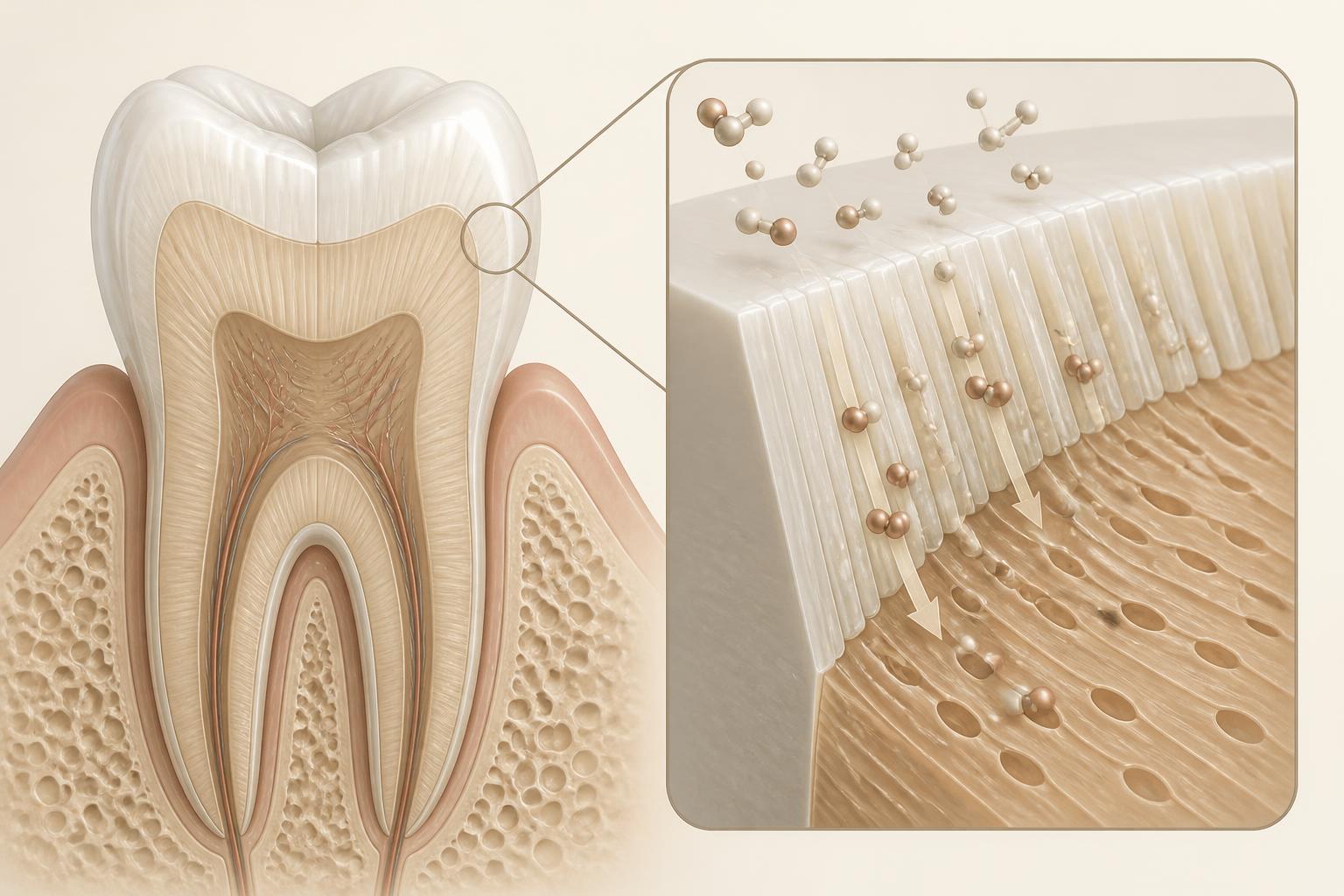
Whitening gel releases peroxide, which passes through the enamel and breaks down the pigment molecules held within the dentine underneath. Nothing is removed from the tooth and no enamel is stripped away. The shade change happens inside the tooth, which is why it takes time and why it is stable once complete.
Enlighten is a combined system. The fourteen nights at home do the substantive work; the appointment at the end lifts and evens the final result.
Before you start
- Have any outstanding treatment and a hygiene appointment completed first. Whitening works on clean enamel, not on plaque or staining.
- Start the desensitising toothpaste you were given a fortnight before night one if you know your teeth are sensitive.
- Check the trays seat fully and sit above the gumline. Contact the practice if an edge digs in rather than persevering with it.
Each night, for fourteen nights
- Brush and clean between your teeth, then dry the teeth with a tissue so the gel contacts dry enamel.
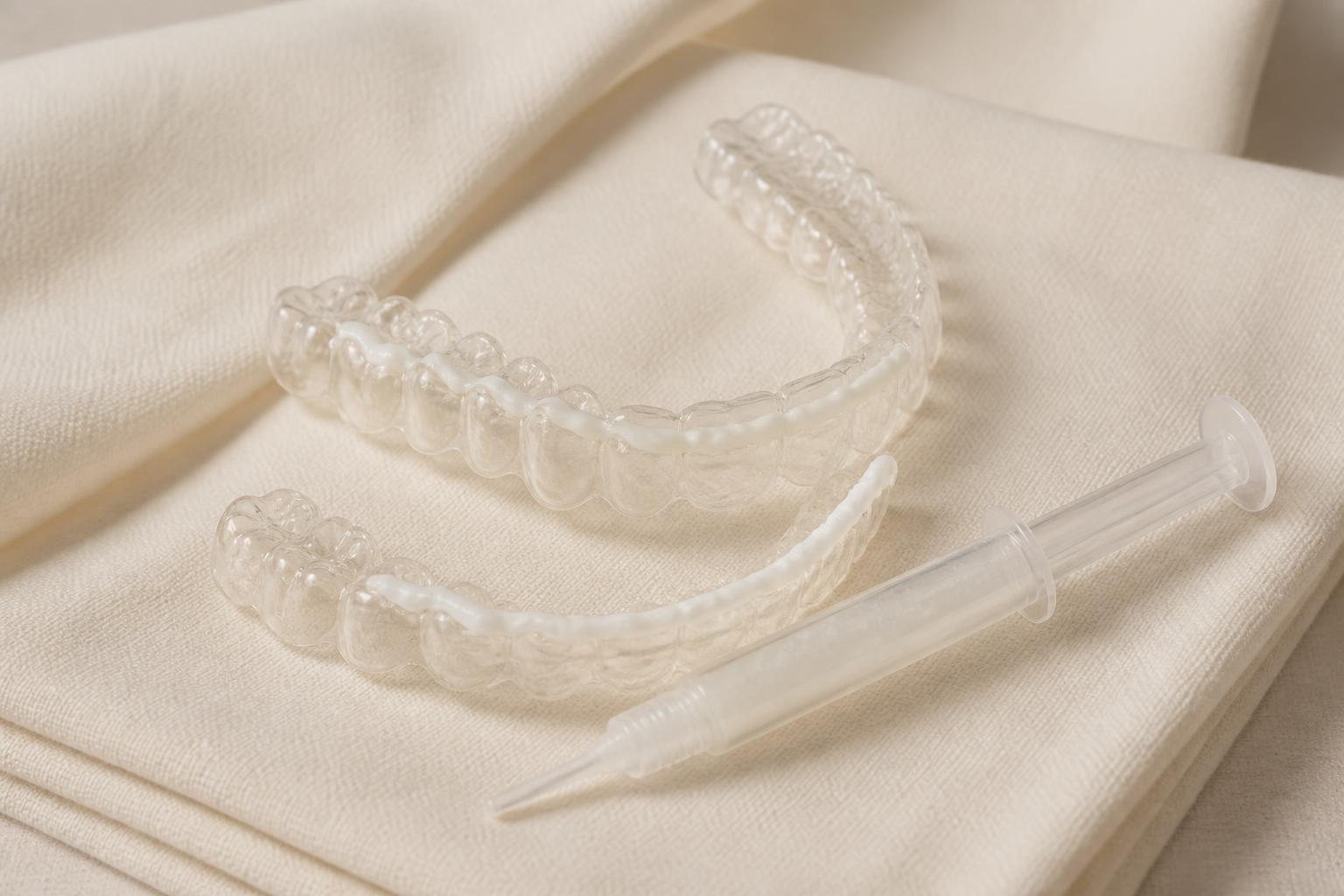
- Place a small dot or thin ribbon of gel on the front-facing surface of each tooth space in the tray. More gel does not whiten faster; it squeezes onto the gums and irritates them.
- Seat the tray fully and wipe away any excess with a clean finger or cotton bud.
- Wear overnight, or for the wear time prescribed for your gel strength.
- In the morning, remove the trays, rinse them in cool water, brush your teeth, and store the trays dry in their case.
- Do not skip nights. The fourteen nights are consecutive by design and an interrupted course gives an uneven result.
The white diet
For the full fourteen nights, and for 48 hours after the finishing appointment, the enamel is temporarily more porous and takes up pigment readily. Keep to pale foods and drinks throughout.
- Suitable: chicken, fish, white rice, pasta with white sauce, potatoes, bread, cauliflower, white cheese, natural yoghurt, bananas, apples, milk and water.
- Avoid: coffee, tea, red wine, cola, fruit juice, curry, tomato sauces, soy sauce, balsamic vinegar, berries, beetroot and coloured mouthwash.
- Avoid smoking and vaping. Both stain heavily during the course.
- If you drink something coloured by accident, rinse with water immediately and continue.
Managing sensitivity
- Short, sharp sensitivity during the course is common and resolves once whitening finishes. It does not indicate damage.
- Use the desensitising toothpaste twice daily throughout, and brush it onto the sensitive teeth without rinsing afterwards.
- For stronger sensitivity, place a small amount of desensitising toothpaste in the clean trays and wear for half an hour during the day.
- If a night is uncomfortable, reduce the wear time or leave one night between applications rather than abandoning the course.
The finishing appointment
After the fourteenth night you return to the practice for the in-chair stage. The gums are isolated, a stronger gel is applied under supervision, and the shade is evened across the arch. Keep to the white diet for a further 48 hours afterwards, when the enamel is at its most receptive to stain.
What will not change
Fillings, crowns, veneers and composite bonding do not whiten. Where there are visible restorations on the front teeth, they may need replacing after whitening to match the new shade. That is planned before whitening begins, not discovered afterwards.
Keeping the result
Whitening is maintained rather than finished. Most patients use a single top-up night every few months, and the interval depends on diet and habits. Keep the trays; they last for years provided they are never exposed to heat.
General guidance from Dr Vikas Prinja, GDC No. 265374. It does not replace the specific instructions given for your own treatment.