
First 24 hours
- Do not rinse, spit forcefully, or use a straw. All three disturb the clot the site depends on.
- Bite gently on the gauze provided if there is oozing. Light blood-stained saliva for several hours is expected.
- Take pain relief before the local anaesthetic fully wears off, following the instructions you were given.
- Avoid hot food and drink, alcohol, smoking, vaping and strenuous exercise.
- Sleep with your head slightly elevated on an extra pillow.
Days two to seven
- Swelling and bruising usually peak at 48 to 72 hours and then settle. Cold packs help within the first 24 hours; gentle warmth afterwards.
- Begin warm salt-water rinses from the day after surgery, a teaspoon of salt in a cup of warm water, after meals and before bed.
- Brush your other teeth normally. Clean the surgical site with whatever you were specifically instructed to use, usually a very soft brush and, where prescribed, chlorhexidine.
- Eat soft food and chew away from the site.
- Complete any prescribed antibiotics in full, even once you feel well.
Sutures and temporary restorations
- Sutures are usually removed at the review appointment. Some types dissolve on their own.
- Do not pull at a suture that feels loose; report it instead.
- A temporary restoration is there to maintain appearance and space. It is not built to chew on.
Healing and the longer timeline
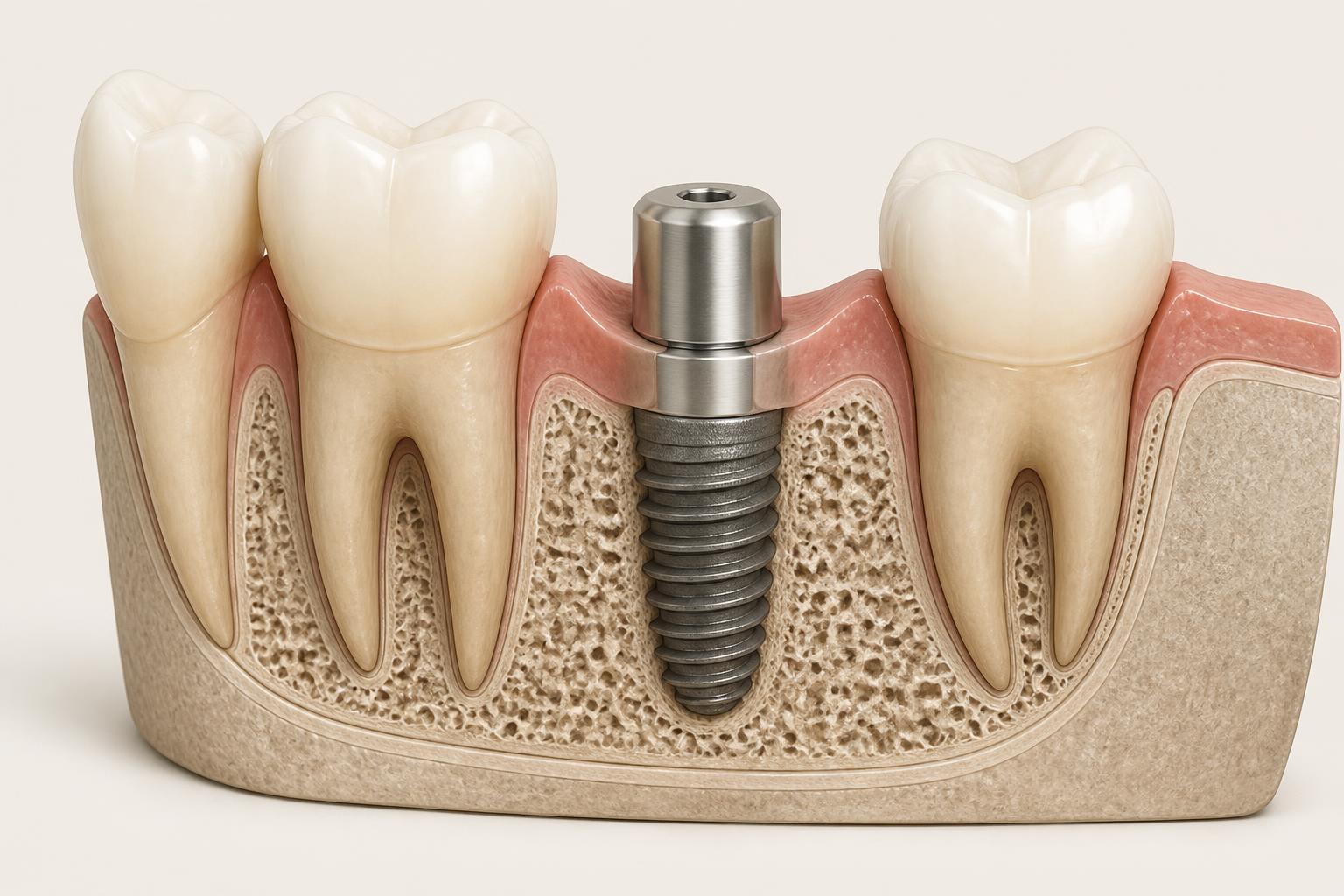
The implant needs to integrate with the bone before it can carry a restoration. That takes months rather than weeks, and longer where grafting has been carried out. The final restoration is made only once integration is confirmed.
Long-term maintenance
Implants do not decay, but the tissues around them can become inflamed and bone can be lost. Daily cleaning around the implant and attending planned maintenance reviews is what protects the result. Smoking and uncontrolled diabetes both raise the risk materially.
General guidance from Dr Vikas Prinja, GDC No. 265374. It does not replace the specific instructions given for your own treatment.